The SFRS Lab is conducting a data collection project on military domestic roles — the full range of responsibilities armed forces take on beyond national defense. Pilot data collection across 55 countries shows that in the past two decades, especially in the wake of 9/11 and the COVID-19 pandemic, militaries have taken on an expanding variety of domestic responsibilities around the world.
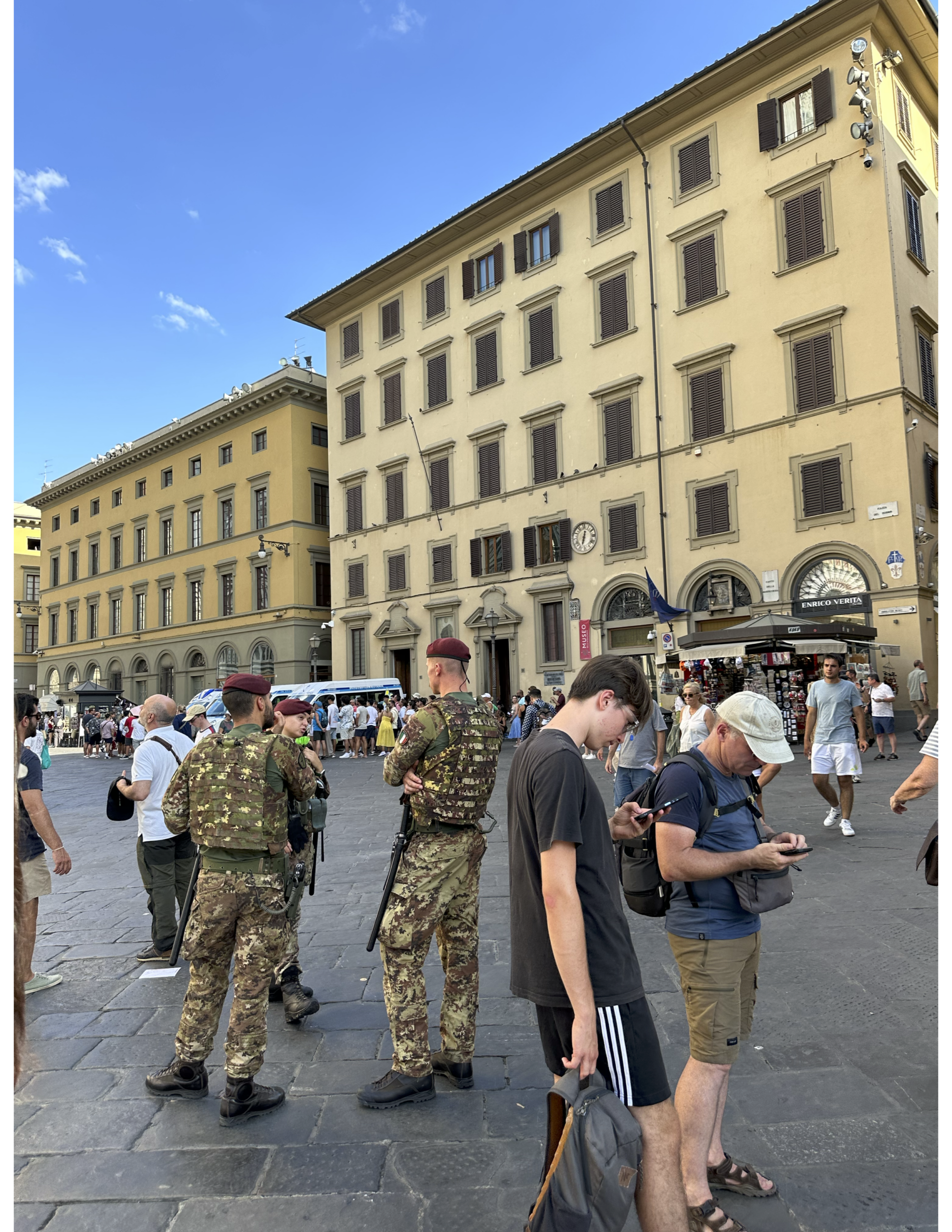
Italian soldiers patrolling streets of Florence, Italy. Photo: Roya Izadi.
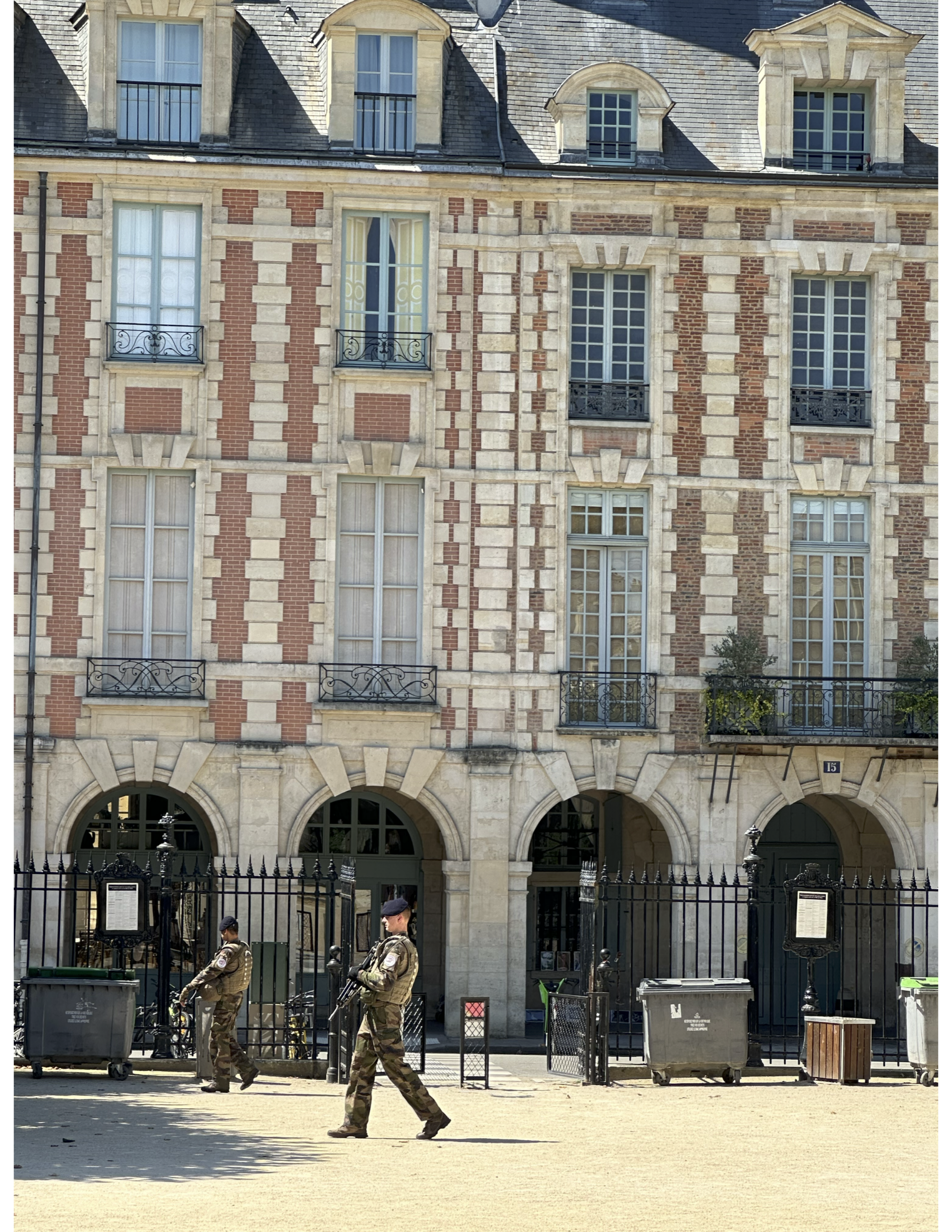
French soldiers patrolling streets of Paris, France. Photo: Roya Izadi.
What we are studying
Domestic roles refer to any responsibility the military is tasked with that falls outside the military domain of armed combat, or that is considered internal/domestic. The SFRS Lab codes all possible domestic tasks that militaries have assumed for all countries from 1970–2025, across six broad categories:
Law enforcement, street patrols, anti-crime operations, civil disturbance response, curfew enforcement
Domestic intelligence gathering, counter-opposition operations, military tribunals for civilians, martial law, state media control, internet control, religion enforcement
Border protection, airports & customs, guarding key facilities, transportation security
Natural disaster response, public health emergencies
Education, social programs, public works, environmental management
R&D, military business enterprises, resource extraction
Preliminary findings
The chart below shows the total count of military domestic role involvement across five countries from 1970–2025. Jordan shows consistently high and growing involvement over time; Venezuela shows dramatic spikes particularly around political crises; Poland’s involvement declined after democratization; while Liberia and Algeria show more modest but growing trends in recent decades.
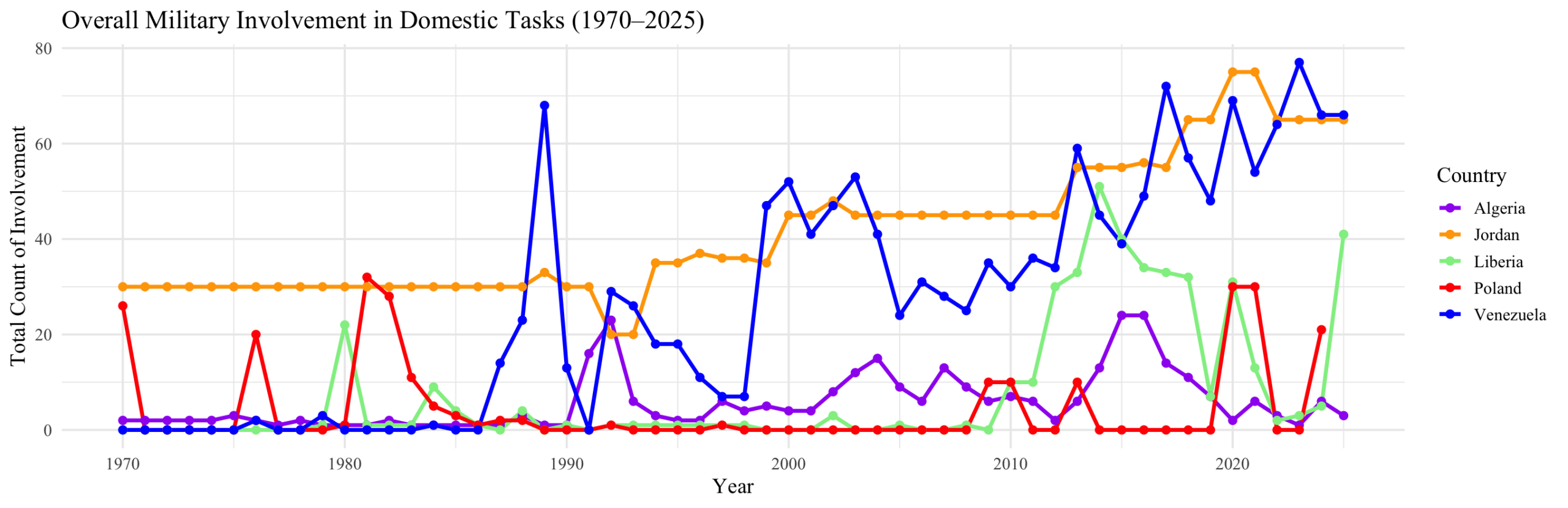
Overall military involvement in domestic tasks across five countries, 1970–2025. Data from SFRS Lab pilot collection. Graph by Ava Palma, Graduate Researcher at the SFRS Lab.
Research goals
This work will advance scholarship on civil-military relations, democracy, security studies, political economy and development and provide an invaluable resource for policymakers, governments, and civil society actors interested in the causes and consequences of military-supported state-building initiatives.